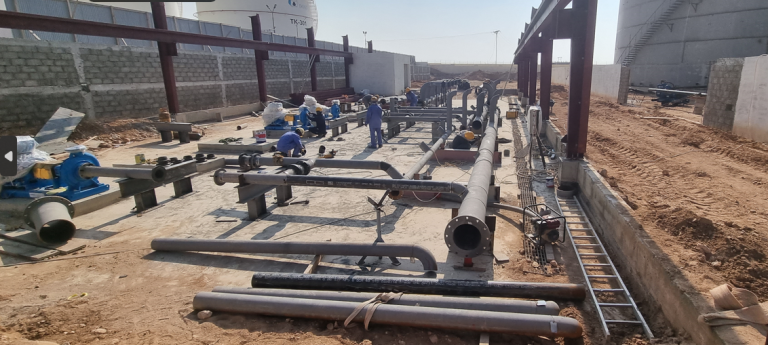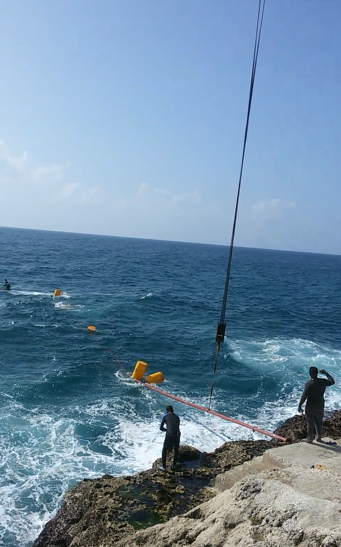
A marine terminal’s most exposed infrastructure is also its least visible day-to-day — the offshore pipeline sections, mooring points, and subsea or splash-zone fittings that sit below the waterline or out on exposed coastal rock. It’s easy for offshore assets to fall out of a routine maintenance schedule simply because nobody walks past them on the way to the control room. Here’s why that’s a costly gap, and what a proper offshore marine maintenance programme should cover.
The splash zone is where corrosion moves fastest
The section of any marine structure that sits at or near the waterline — the “splash zone” — experiences the most aggressive corrosion of any part of the installation. It’s wetted and dried in cycles, exposed to both oxygen and saltwater, and often takes physical wave impact that steel further underwater or fully in air doesn’t see. Offshore pipeline sections, mooring hardware, and structural steel in this zone need more frequent inspection than the rest of the installation, not less.
What an offshore maintenance inspection should actually check
A serious inspection programme covers:
- Coating condition on exposed steel — coating breakdown is usually the first visible sign of a corrosion problem developing
- Pipeline and fitting integrity at flange connections and support points, where movement and fatigue concentrate stress
- Mooring and anchor point condition — chain, shackles, and anchor points that see constant cyclic load from vessel movement and swell
- Diver-based visual and, where required, ultrasonic thickness inspection of subsea sections that can’t be checked from the surface
- Crane and lifting equipment condition, for terminals that use fixed offshore lifting gear for berthing or maintenance operations
Why offshore maintenance gets deprioritised — and why that’s expensive later
Offshore and marine maintenance work is logistically harder than terminal-side maintenance: it needs a vessel, often a crane barge, sometimes divers, and it’s weather-dependent in a way land-side work isn’t. That logistical friction is exactly why it gets pushed down the priority list on a busy terminal’s maintenance calendar — and exactly why deferred offshore maintenance tends to surface as an unplanned, urgent, and far more expensive repair later, often during a weather window that makes the fix harder than it would have been on a scheduled visit.
A terminal operator who books offshore inspection and light maintenance as a standing annual or twice-yearly programme — rather than reactively, after something fails — is buying predictability into what is otherwise the least predictable part of their maintenance budget.
What this looks like in practice
On offshore marine works we’ve delivered across the region — including offshore marine installation and maintenance works at multiple coastal sites — the jobs that come in as emergency call-outs are almost always ones where a splash-zone coating issue or a mooring point wear pattern had been visible on the previous inspection and simply wasn’t actioned. The maintenance itself, when caught early, is often a fraction of the cost and downtime of the emergency version of the same fix.
Planning an offshore maintenance programme
Karoep General Engineering Limited carries out offshore marine installations and maintenance works, including pipeline and mooring-related fittings along the East African coast. If your terminal’s offshore assets haven’t had a structured inspection in the last twelve months, get in touch to talk through what a maintenance programme for your specific site should look like.