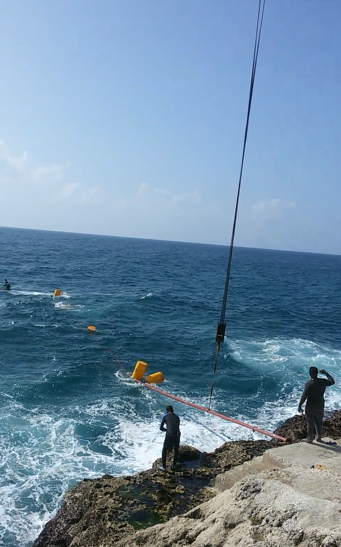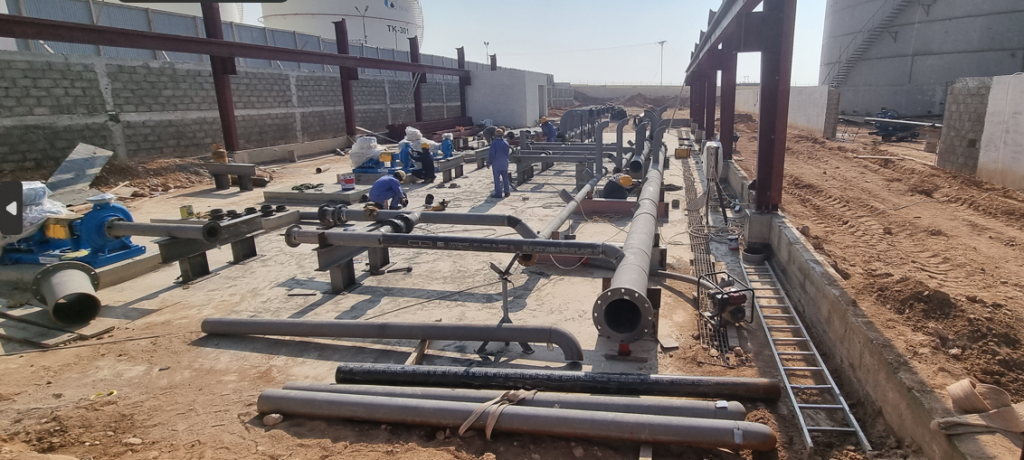
Pipeline work on a terminal site rarely gets the attention it deserves at the planning stage — it’s often treated as a line item that sits between “civil works” and “mechanical works” on a project schedule, when in practice it’s its own discipline with its own failure points. Here’s a practical look at what pipeline installation and repair actually involves on an oil & gas terminal site, and what tends to go wrong.
Installation vs. replacement vs. repair — different scopes, different risks
New installation is the most straightforward of the three: trenching, pipe laying, welding, coating, and testing on a clean run with no existing infrastructure to work around.
Replacement means removing a section of existing pipeline — often while the rest of the terminal stays operational — which adds isolation, purging, and sequencing requirements that a greenfield installation doesn’t have.
Repair is usually the most time-pressured of the three. A leak or integrity failure on an operating terminal creates commercial pressure to fix fast, but a rushed repair on pressurised or product-carrying pipework is exactly where shortcuts turn into bigger failures later.
What a pipeline installation scope actually covers
On terminal and cross-country pipeline projects, the typical scope runs:
- Route survey and trenching — including excavation through variable ground conditions, which across parts of East Africa can mean anything from soft coastal sand to rock.
- Pipe stringing and welding — field welding to the specified procedure, with weld numbering and traceability maintained for the as-built record.
- Non-destructive testing — radiography or ultrasonic testing of field welds before backfill or coating.
- Coating and cathodic protection — corrosion protection is not optional on buried pipeline, and it’s one of the first things a rushed contractor skips.
- Hydrostatic or pneumatic testing — pressure testing the completed line before it’s tied into the live system.
- Tie-in and commissioning — the highest-risk step, often done on a live or partially live system, requiring careful isolation and permit-to-work discipline.
Why trench and backfill quality matters as much as the weld
It’s easy to focus scrutiny on weld quality — rightly, since a bad weld is the highest-consequence failure point — but trench bedding and backfill quality is what protects that weld and the pipe coating over the following decade. Pipe laid on unprepared or rocky bedding, or backfilled without proper compaction, is more likely to see coating damage and settlement stress over time, which shows up years later as a leak that’s expensive to trace and repair. On sites with rocky or uneven ground — a common condition on some of the offshore-adjacent and coastal sites we’ve worked — bedding preparation is worth the extra day it costs.
Repair works: containing scope creep
A pipeline repair job has a habit of growing once excavation starts and more of the surrounding pipe is exposed. That’s not necessarily a bad thing — better to find and fix adjacent corrosion now than come back in six months — but it does mean repair contracts should be scoped with a clear process for how additional defects found mid-repair get approved and priced, rather than leaving that as an argument for after the invoice arrives.
Field experience across terminal and cross-country pipeline work
Karoep General Engineering Limited has delivered pipeline installation and repair works at sites including Bosaso, Puntland, alongside terminal maintenance and pipeline installation works across multiple client sites. If you’re scoping new pipeline installation, a replacement section, or an urgent repair on an operating terminal, contact our team — we can talk through the scope and testing requirements before you finalise your specification.